FELINE TRANSITIONS® Rehab Programs: Helping Cats Stay Home When Possible
FELINE TRANSITIONS® Rehab Programs: Helping Cats Stay Home When Possible
At Cats in the City Rescue, we have spent the last eighteen months helping cats transition into carefully matched new homes through our FELINE TRANSITIONS® Structured Re-homing Program.
During that time, we completed 28 structured rehoming cases with zero adoption returns and zero behavioral euthanasia outcomes.
As we reviewed those cases, a pattern began to emerge.
Many of the challenges that brought families to the point of surrender were not random. They were recurring, identifiable, and often visible long before relinquishment became necessary.
Fear. Stress. Household conflict. Litter box concerns. Medication difficulties. Chronic illness. Major life transitions. Environmental instability. The arrival of a new baby. The introduction of another pet. Changes in routine, health, or family structure.
Again and again, we found ourselves asking the same question:
What if the intervention happened before surrender instead of after?
The result was the development of our FELINE TRANSITIONS® Rehab Programs.
These programs are built from the same stabilization, rehabilitation, observation, and support strategies we have historically used after surrender to help cats succeed in their next homes.
Today, we increasingly deploy those same interventions upstream, before surrender occurs, with the goal of helping cats remain safely and successfully in their existing homes whenever possible.
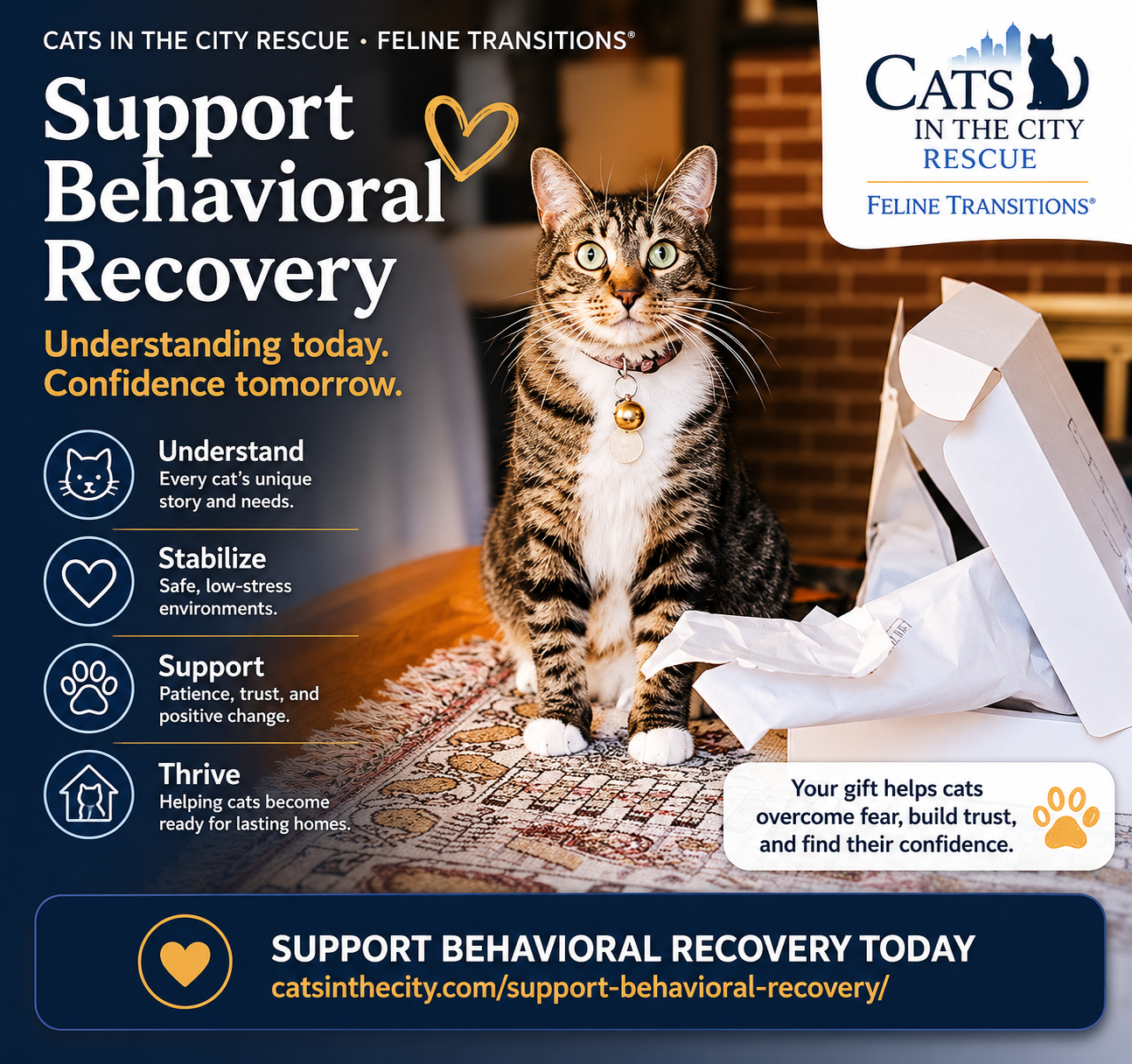
Our Core Belief
The best placement is often the one that never becomes necessary.
Common Reasons Families Seek Support
Many families contact us because they love their cat deeply but are struggling with challenges that feel overwhelming.
- Fearful or reactive behavior
- Litter box challenges
- Multi-cat household conflict
- Medication administration difficulties
- Diabetic care challenges
- Environmental instability and major life transitions
- Stress-related behavioral changes
- Difficulty maintaining treatment plans
- Medical conditions that affect quality of life
In many situations, the cat does not need a new home.
The cat needs support, stabilization, education, environmental modification, rehabilitation, or a structured care plan.
Featured Rehab Programs
Our programs are designed to address some of the most common drivers of surrender while helping families preserve safe, healthy, sustainable relationships with their cats.

Explore Our Rehab Programs
Click below to learn more about each program and determine which option may be the best fit for your cat and family.
Explore our complete collection of rehabilitation, stabilization, and support programs. Fearful & Reactive Cat Support
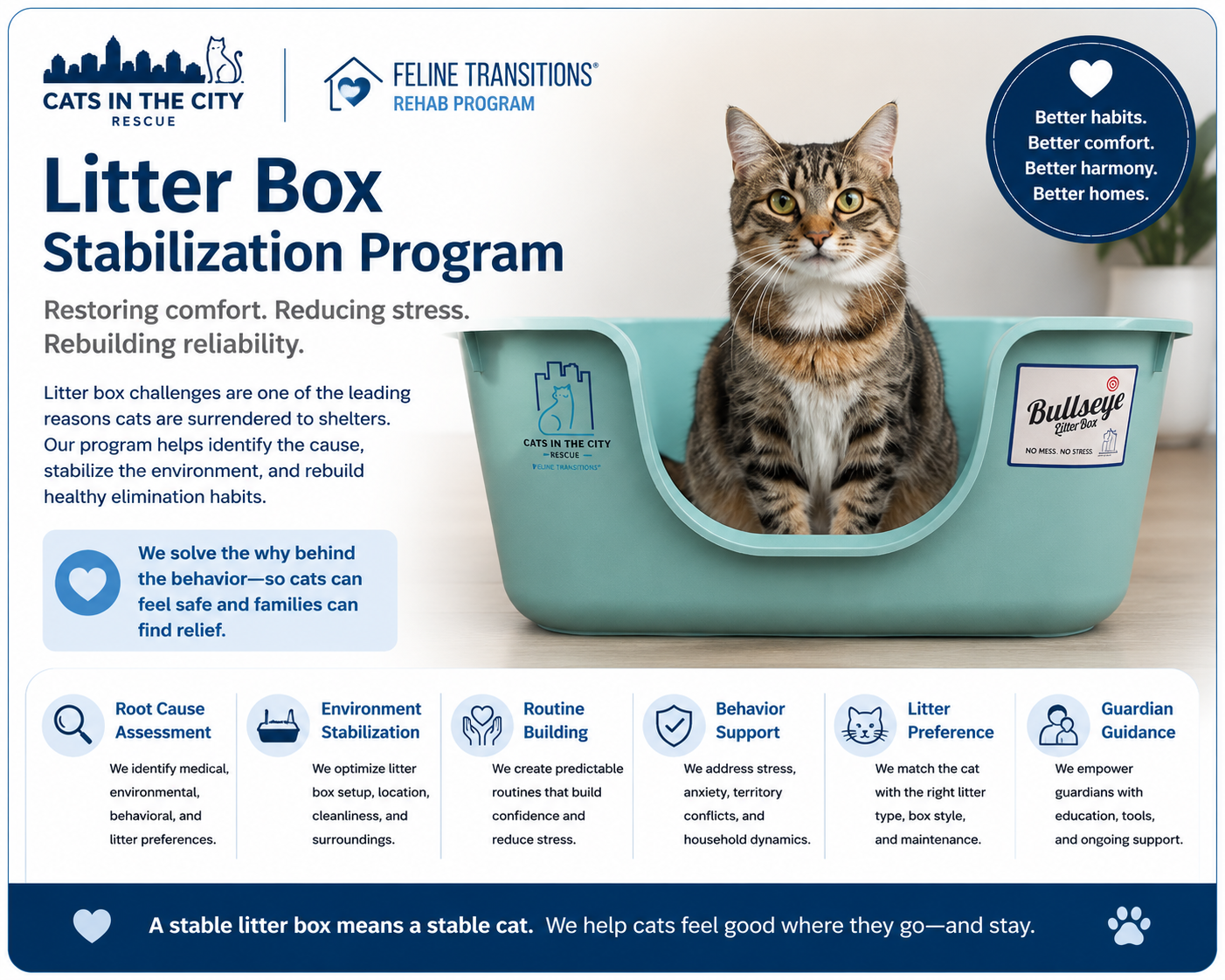
Helping cats reduce fear, build confidence, and feel safer in their environment. Litter Box Stabilization Program
Addressing one of the most common reasons cats lose their homes. Behavioral Stabilization Boarding
A structured environment for observation, assessment, regulation, and recovery. Medication Desensitization & Habituation Program
Helping cats and guardians build sustainable medication routines. Medication Training Boarding
Hands-on support for medication administration and care routines. Insulin Support for Diabetic Cats
Helping guardians build confidence and consistency around diabetic care.
Why This Model Exists
Traditional rescue begins after a cat has lost its home.
FELINE TRANSITIONS® increasingly begins before that happens.
Our goal is not simply to rehome cats successfully. Our goal is to understand the cat, understand the environment, identify the source of instability, and create the best possible outcome.
Sometimes that outcome is a carefully matched new home.
Sometimes that outcome is helping the cat remain where it already belongs.
Either way, the mission is the same:
Better care. Better outcomes. Stronger futures.
Related Articles
Understanding the FELINE TRANSITIONS® Journey
Understanding the FELINE TRANSITIONS® Journey Ethically Structured Re-homing for Cats Who Need More Than Simple Placement When most people think about re-homing, they imagine finding a new home and transferring the cat. For some cats, that may be ...FELINE TRANSITIONS® Rehabilitation Program | Mission Driven Activity
FELINE TRANSITIONS® Rehabilitation Program | Mission Driven Activity Keeping Cats Home When Possible. Creating Better Outcomes When Not. Cats in the City Rescue believes that many cats facing surrender are not suffering from a lack of love. They are ...PICA-Safe Housing for Cats in Structured Rehab
PICA-Safe Housing for Cats in Structured Rehab Creating Safety Without Creating Isolation For guardians of cats with PICA, one concern often outweighs every other question: "What if my cat eats something that will hurt them?" We understand that ...FELINE TRANSITIONS®: Outcomes From 28 Structured Rehoming Cases With Zero Returns and Zero Behavioral Euthanasia
FELINE TRANSITIONS®: Outcomes From 28 Structured Rehoming Cases With Zero Returns and Zero Behavioral Euthanasia Shawn Lioyryan, MSW Cats in the City Rescue FELINE TRANSITIONS® Abstract Objectives To describe the early outcomes of the FELINE ...The Risks of Home Dematting
The Risks of Home Dematting Why Removing Mats Is More Complicated Than It Looks When guardians discover mats in their cat's coat, the natural instinct is often to try to remove them at home. Many people assume mats can be brushed out, cut away with ...